
Key Takeaways:
- Calendar apps have near-universal device penetration, yet most marketing budgets allocate zero dollars to calendar strategy
- A calendar save represents a stronger commitment signal than an email open or social like - it's the user actively planning to show up
- Calendar events trigger free reminder notifications, creating multiple touchpoints you're probably not tracking
- Smart brands in 2025 are treating calendars as owned media, not just utilities
- Building calendar infrastructure lets you measure saves, track attendance correlation, and scale branded experiences
Here's a fun little irony for you.
Marketers will spend hours analyzing email open rates. They'll debate the perfect posting time on Instagram. They'll build elaborate dashboards tracking every click, impression, and scroll.
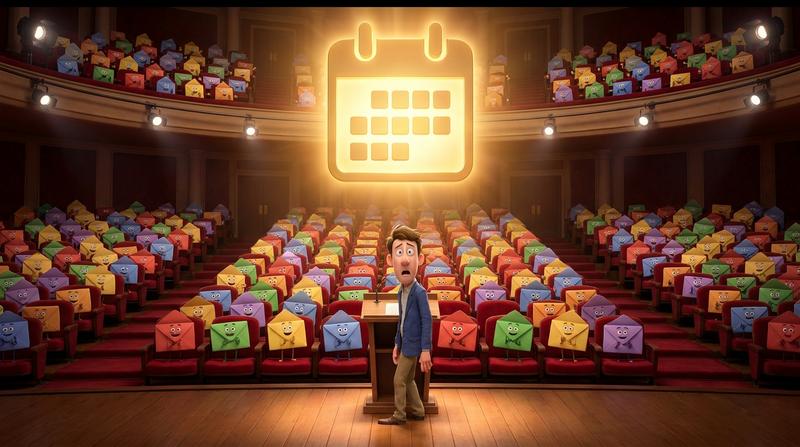
But the one channel sitting on literally every phone, tablet, and laptop? The one with 100% device penetration?
Crickets. 🦗
No strategy. No budget. No line item.
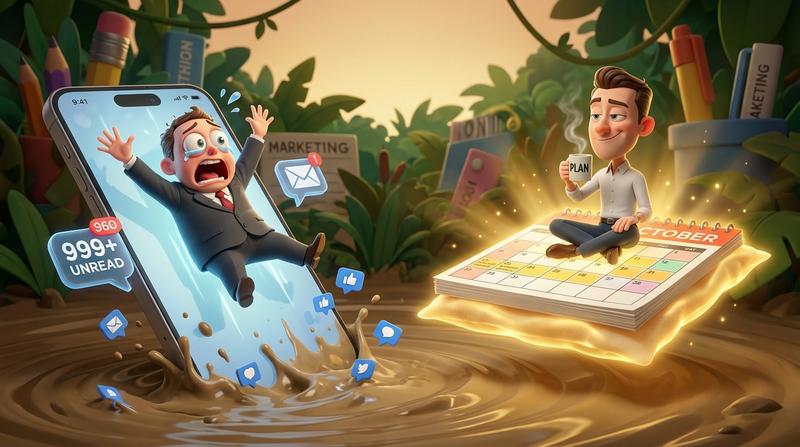
The calendar app - that humble little grid of dates - is the most overlooked piece of marketing real estate in your entire funnel. And the brands figuring this out right now? They're quietly winning while everyone else obsesses over algorithmically-suppressed social posts.
Let's talk about why calendars deserve their own strategy - and how to actually build one.
📱 The Invisible Channel: Why Calendars Get Overlooked
Think about your marketing tech stack for a second.
Email has Mailchimp, Klaviyo, ConvertKit. Social has Hootsuite, Buffer, Sprout Social. Paid ads have entire platforms dedicated to optimization.
Calendars have... what, exactly?
Nothing. A big fat nothing.
And that's the problem. We've created this mental gap where calendars are utilities - just tools for scheduling dentist appointments - rather than touchpoints in the customer journey.
But here's the thing: a calendar event is premium real estate.
- It triggers notifications (free reminder impressions!)
- It occupies literal screen time on the user's device
- It lives there until the moment passes
- It can contain links, descriptions, and subtle branding
As Peter Drucker once said, "What gets measured gets managed." And right now, nobody's measuring calendars - which means nobody's managing this channel.
That's a massive missed opportunity.
When someone saves your event to their calendar, they're not just clicking a button. They're making a micro-commitment. They're saying "yes, I plan to be there" in a way that's fundamentally different from opening an email or liking a post.
This is why calendar marketing strategies deserve the same attention you give your newsletter sequence.
📊 The Numbers Don't Lie (But They Might Surprise You)
Let's get specific about why calendars matter.
According to MailerLite's 2025 benchmarks, the average email open rate hit 43.46% this year. Sounds decent, right?
But here's the catch - Apple Mail Privacy Protection automatically marks emails as "opened" even when nobody actually reads them. Your real engagement? Probably much lower than your dashboard suggests.
Meanwhile, Sprout Social reports that organic social reach requires constant algorithm-chasing, with brands needing faster response times and more native content just to maintain visibility.
Now compare that to a calendar save:
| Channel | Actual Visibility | User Commitment Level | Reminder Capability |
|---|---|---|---|
| Inflated by privacy features | Low (passive open) | Requires follow-up sends | |
| Social | Algorithm-dependent (~5-8%) | Very Low (scroll-by) | None |
| Calendar | 100% (it's on their device) | High (active save) | Built-in notifications |
See the difference?
A calendar entry doesn't compete with an algorithm. It doesn't get buried in a cluttered inbox. It sits there, triggering reminders at exactly the times you specify.
And according to 9cv9's research, market penetration of scheduling applications reached 51.68% in 2023 - up from just 26.37% in 2021. People are increasingly living in their calendars.
So why aren't you there too?
🎯 What a Calendar Strategy Actually Looks Like
Okay, so calendars are valuable. But what does a "calendar strategy" even mean in practice?
It's not complicated. It comes down to three componenets:
1. Intentional Placement
Where and when do you offer the save?
- On your event registration confirmation page (obvious, but often missing)
- In confirmation emails (the moment of highest intent)
- On event landing pages (before they even register)
- In reminder sequences ("Add this to your calendar so you don't forget")
Most brands slap a calendar link somewhere and call it a day. Strategic brands think about when in the journey a save makes the most sense.
2. Branding Inside the Event
A calendar event isn't just a date and time. It's a mini landing page sitting in your prospect's personal planner.
You can include:
- Compelling event descriptions
- Links back to your site or resources
- Location details (physical or virtual meeting links)
- Pre-event reminders with different messaging
This is where most people drop the ball. They create generic, boring events that look like they were auto-generated (because they were).
3. The Follow-Through
What happens after someone saves?
Think about email nurture sequences. You don't just send one email and hope for the best - you build a journey.
Calendars can do this too. The event itself can contain multiple reminder touchpoints. You can update the event with new information as the date approaches. You can even trigger post-event follow-up based on whether someone saved.
This is where treating calendar sharing as a strategic channel really pays off.
📈 The Metrics Nobody Tracks (Yet)
Here's where it gets interesting.
If calendars are a marketing channel, they need KPIs. But nobody's tracking calendar-specific metrics.
Let me introduce you to a few:
Save Rate vs. Click Rate
Your click rate tells you someone was interested enough to tap a button. Your save rate tells you they were interested enough to commit time in their schedule.
That's not the same thing. At all.
The gap between "clicked" and "saved" is what I call the commitment gap - and it's a powerful indicator of actual intent to attend.
Event Reminder Impressions
Every calendar event you create can trigger notifications. Maybe 15 minutes before. Maybe the day before. Maybe a week out.
These are free touchpoints. Free impressions. Free reminders that your event exists.
Are you counting them? Probably not.
Attendance Correlation
This is the big one: do people who save to their calendar actually show up more often than those who don't?
Spoiler: yes. Significantly more.
Understanding calendar saves as a predictive metric can transform how you think about event marketing. It shifts your focus from vanity metrics ("how many people registered?") to predictive metrics ("how many people are likely to actually attend?").
🏗️ Building Your Calendar Infrastructure
So you're convinced. Calendars matter. But how do you actually operationalize this?
You need infrastructure.
Not a random collection of ICS files emailed out sporadically. Real infrastructure that lets you:
- Create consistent, branded calendar experiences across all your campaigns
- Track saves without invading anyone's privacy
- Scale across multiple events, teams, and channels
- Update events after people have saved them (yes, this is possible)
This is where Add to Calendar PRO becomes the backbone of your calendar marketing efforts.
Instead of cobbling together homegrown solutions - or worse, just linking to generic calendar files - you get a system designed specifically for this channel.
Think of it like the difference between sending emails through your personal Gmail versus using a proper ESP. Sure, both technically "work." But one gives you the infrastructure to actually run a channel at scale.
Here's what proper calendar infrastructure looks like:
| Without Infrastructure | With Add to Calendar PRO |
|---|---|
| Manual ICS file creation | Automated, branded event generation |
| No save tracking | Analytics on saves and engagement |
| Inconsistent branding | Customizable, on-brand experiences |
| One-off implementations | Scalable across campaigns |
| Technical headaches (timezones, anyone?) | Works across all calendar platforms |
As Steve Jobs put it, "Design is not just what it looks like and feels like. Design is how it works." Your calendar touchpoints should work seamlessly - for you and for your audience.
🚀 The Brands Winning in 2025
Let's wrap this up with some real talk.
The brands winning attention in 2025 aren't just in inboxes - they're in calendars. They're in the one place on every device that doesn't require algorithmic luck or inflated open rate metrics.
They understand that a calendar save isn't just a nice-to-have. It's a conversion event. It's someone saying "I'm planning to show up" in a way no other digital action quite captures.
And they've built the infrastructure to treat it that way.
So here's your homework:
- Audit your current calendar presence. Do you even offer calendar saves? Where? How?
- Look at your metrics. Can you connect calendar saves to actual attendance? If not, that's a gap.
- Think about calendar as owned media. What would it look like to have a real strategy here?
The calendar channel has been sitting in your customers' pockets this whole time. Premium real estate, zero rent.
Maybe it's time to move in. 📅